Quick Answer: Surgery to make eyes bigger doesn’t enlarge the eyeball — it reshapes the eyelids and corners of the eye. The three main methods are double eyelid surgery (creates an eyelid crease), epicanthoplasty (opens the inner corner), and lateral canthoplasty (extends the outer corner). Each targets a different part of the eye and is often combined for a fuller result.

Nội dung
- What Does “Surgery to Make Eyes Bigger” Actually Mean?
- Who Considers This Type of Surgery?
- The 3 Main Methods, Compared
- Combining All Three: What to Expect
- Risks and Safety Considerations
- Recovery Timeline
- Aftercare Guide
- Frequently Asked Questions
- Choosing the Right Provider for Surgery to Make Eyes Bigger
What Does “Surgery to Make Eyes Bigger” Actually Mean?
Despite the name, no procedure physically enlarges the eyeball itself. Instead, these surgeries reshape the eyelid and the surrounding eye corners to create a more open, defined appearance.
Surgeons typically combine two or three techniques — double eyelid surgery, inner corner opening, and outer corner extension — depending on your natural eye shape and goals.
Expert Insight: Why These Techniques Work
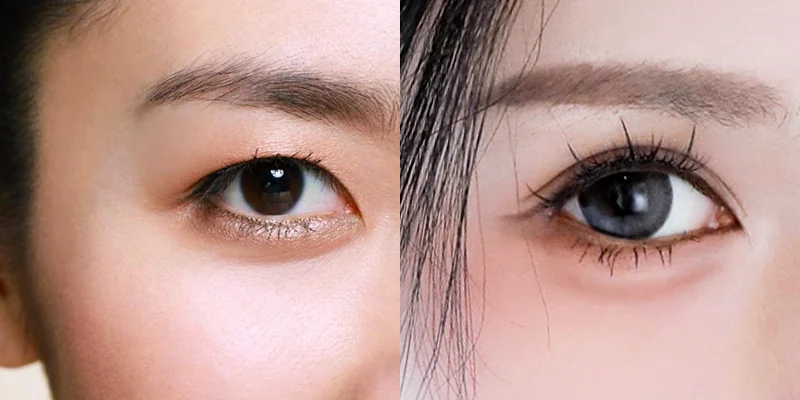
The perception of “bigger eyes” comes down to exposed eyelid surface area and eye shape geometry. A visible upper eyelid crease exposes more of the eyelid skin above the lash line, while opening the inner and outer corners physically lengthens the horizontal span of the eye opening. Combined, these changes increase how much of the eye is visible at rest — which is what reads as “bigger” to the eye, even though the eyeball itself never changes size.
Who Considers This Type of Surgery?
These procedures are typically considered by people with:
- Monolids, hooded eyes, or a naturally faint eyelid crease
- Prominent epicanthal folds that make the eyes appear smaller or closer-set
- Eyes set close together, or with limited horizontal width
- Uneven or asymmetrical results from a previous eye surgery
The 3 Main Methods, Compared
| Method | What It Targets | What It Does |
|---|---|---|
| Double eyelid surgery (blepharoplasty) | Upper eyelid | Removes excess skin/fat, creates a defined crease |
| Epicanthoplasty | Inner eye corner | Releases the epicanthal fold, opens inner corner |
| Lateral canthoplasty | Outer eye corner | Extends and lifts the outer corner |
1. Double Eyelid Surgery (Blepharoplasty)
This is usually the first procedure patients consider. The surgeon makes a small incision along the natural eyelid crease line, removes excess fat and loose skin, then reattaches the levator muscle to create a stable, visible crease.
Expert Insight: The eyelid crease forms because internal scar tissue “anchors” the skin to the underlying muscle, so it folds inward every time you open your eyes. This is why the crease looks different from a natural double eyelid until swelling fully resolves — the anchoring tissue needs time to soften and settle.
Contrary to older marketing claims, this procedure does involve mild discomfort (typically well-controlled with local anesthesia and standard pain relief) and does leave a scar — though it’s deliberately placed within the eyelid crease itself, making it very difficult to notice once healed.
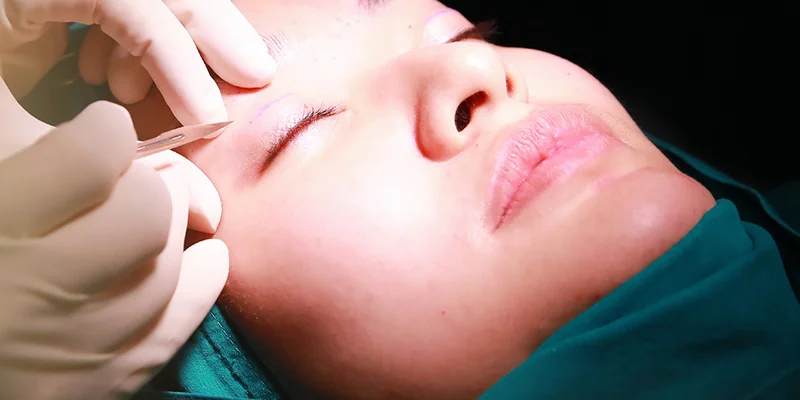
==> Double eyelid surgery Perfect Eyes
2. Epicanthoplasty (Inner Corner Opening)
Epicanthoplasty reshapes the inner corner of the eye by releasing the epicanthal fold — the small fold of skin that can cover part of the inner eye and make eyes appear closer-set or shorter.
This is commonly performed alongside double eyelid surgery, since releasing tension at the inner corner helps the new eyelid crease look more natural and complete rather than abrupt.
Pro Tip: If your main concern is that your eyes look “close together” rather than simply small, epicanthoplasty — not double eyelid surgery alone — is usually the procedure that actually addresses it.
3. Lateral Canthoplasty (Outer Corner Extension)
Lateral canthoplasty lengthens and lifts the outer corner of the eye, extending the eye horizontally rather than adding a crease. It’s often chosen by patients whose eyes are already double-lidded but appear short or rounded rather than elongated.
Because this method changes the horizontal proportion of the eye relative to the face, surgeons typically evaluate it in the context of your entire facial structure — not the eye in isolation.
Combining All Three: What to Expect
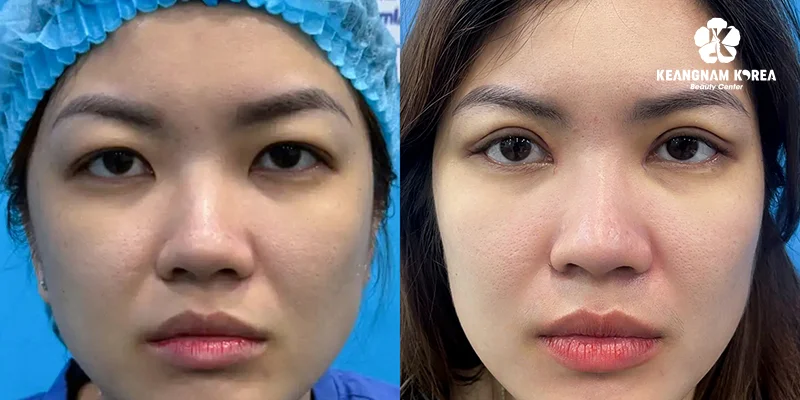
Patients who combine all three methods generally see the most dramatic change, since each technique addresses a different dimension: vertical crease definition, inner corner opening, and horizontal length. That said, more combined procedures also mean more combined swelling, a longer overall settling period, and a higher cumulative cost — so a staged approach (starting with double eyelid surgery, then adding canthoplasty later if desired) is a reasonable option worth discussing with your surgeon.
Risks and Safety Considerations
Every surgical eye procedure carries some risk, and it’s worth going in with realistic expectations rather than being caught off guard:
- Scarring — minimized by careful incision placement, but never fully eliminated
- Asymmetry — a small difference between the two eyes is common and sometimes needs minor revision
- Overcorrection or undercorrection — the crease or corner may end up more or less pronounced than planned
- Dry eye or temporary changes in eyelid function — usually resolves as swelling subsides
- Infection — rare with proper sterile technique and aftercare
Common Mistakes to Avoid
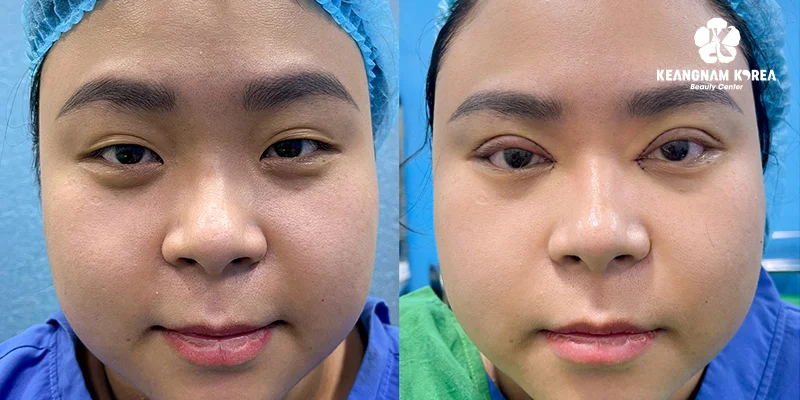
- Judging results too early. Swelling can make even a perfect surgery look uneven for the first 1-2 weeks — don’t panic before the initial healing phase is even over.
- Choosing based on price rather than surgeon experience. These are delicate, technically demanding procedures; an inexperienced surgeon is the single biggest risk factor for poor results.
- Skipping the “why” conversation. Patients who ask for “double eyelid surgery” when their real concern is close-set eyes often end up needing epicanthoplasty anyway — a thorough consultation upfront avoids this.
- Rubbing or touching the eyes during early recovery. This is one of the most common, and most avoidable, causes of complications.
Recovery Timeline
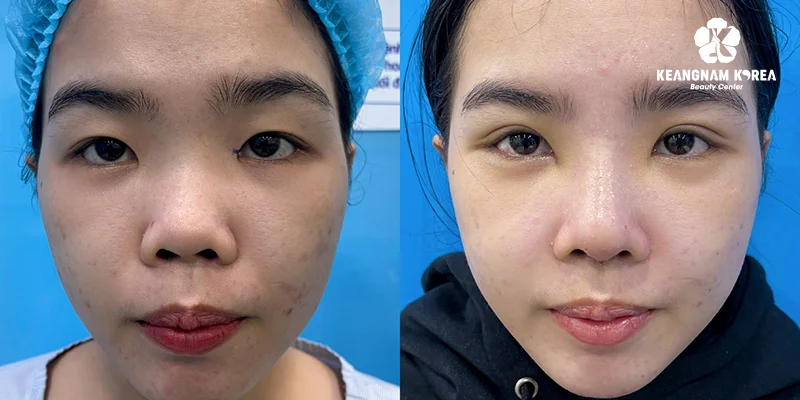
Visible swelling and bruising typically peak in the first 48-72 hours, then steadily improve. Most patients feel comfortable returning to normal social activities within 10 to 14 days, though full results — including the scar softening and the crease settling into its final shape — take 3 to 6 months to fully mature.
Pro Tip: Sun protection over the treated area during recovery isn’t just about comfort — UV exposure can darken healing scar tissue, making it more visible for longer. A simple pair of UV-protective sunglasses in the first few months makes a real difference.
Aftercare Guide
- Clean the incision area with saline solution as instructed by your surgeon
- Avoid rubbing, pressing, or applying makeup near the eyes in the first week
- Skip sticky rice, chicken, seafood, and other foods your surgeon flags as scar-sensitive in your specific aftercare plan
- Eat a diet rich in vitamins and leafy greens to support healing
- Limit screen time in the first few days, since eye strain can worsen swelling
- Attend every follow-up appointment so your surgeon can monitor healing and catch any issues early
Frequently Asked Questions
Does surgery to make eyes bigger actually work?
Yes — by reshaping the eyelid crease and eye corners, surgery to make eyes bigger creates a genuinely larger-looking, more open eye area. The eyeball itself doesn’t change size, but the visible portion of the eye does increase.
Which method should I start with?
Most patients start with double eyelid surgery, since it addresses the most common concern (a faint or absent crease), then add epicanthoplasty or lateral canthoplasty if close-set eyes or short eye length remain a concern afterward.
Is the scar from double eyelid surgery visible?
It’s placed directly within the eyelid crease, so it’s very difficult to notice once fully healed — but it is a real scar, not a scar-free procedure, and it takes 6-12 months to fully fade.
How long until I can go back to work?
Most patients feel comfortable returning to work or social settings once major swelling and bruising resolve, typically around 10-14 days, sometimes assisted with light makeup or sunglasses in the final few days.
Choosing the Right Provider for Surgery to Make Eyes Bigger
Because all three procedures require precise, technically demanding surgical skill, the experience and track record of your surgeon matters more here than almost any other cosmetic decision. A surgeon who has genuinely performed hundreds of these combined procedures will recognize subtle anatomical differences that a less experienced provider might miss entirely — the difference between a natural-looking result and one that needs revision often comes down to exactly this kind of pattern recognition.
Keangnam Korea’s eye surgery team specializes in this exact combination of techniques — Perfect Eyes double eyelid surgery — with an individualized consultation to determine which combination of methods actually fits your eye shape and goals, rather than defaulting to a one-size-fits-all approach.
Not sure which eyelid or eye rejuvenation method is right for you?
Every eye is different, so choosing the right technique depends on your eyelid structure, skin condition, fat distribution, and the look you want to achieve.
Contact our hotline at +84 911 833 555 today to speak with our consultation team and learn more about the most suitable options for your eyes. We’ll help you understand the available methods, what to expect from each procedure, and find an approach that matches your individual needs and aesthetic goals.
Call us now and take the first step toward beautifully defined, natural-looking eyes.
FREE CONSULTATION