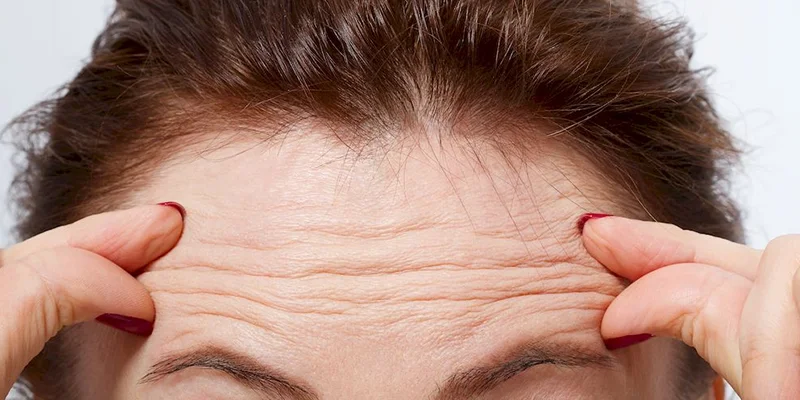
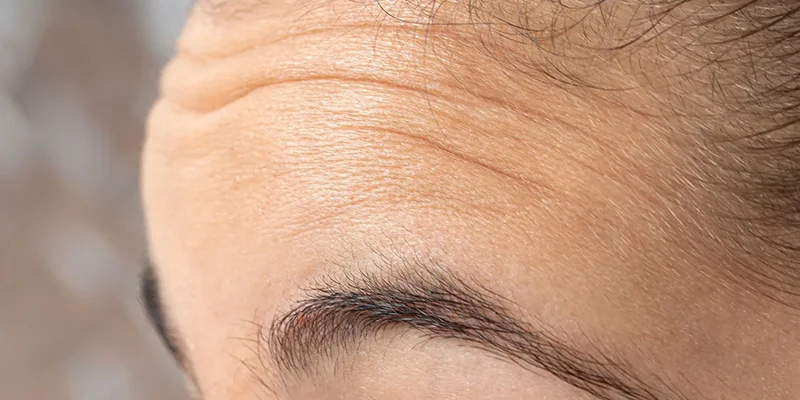
Horizontal forehead lines form when the frontalis muscle repeatedly lifts your eyebrows, while aging and sun damage reduce the skin’s ability to bounce back. Heavy upper eyelids can make the forehead work harder. Early horizontal forehead lines respond to retinoids and sunscreen; deeper lines are best treated with Botox, laser, or skin regeneration, often combined.
Horizontal forehead lines are often the first wrinkles people notice, sometimes as early as their mid-20s. They run across the forehead like ruled lines on a page, and they tend to deepen year after year if nothing changes.
Understanding why your lines formed is the key to treating them properly. This guide from Keangnam Korea explains the causes, including one that many people overlook, then compares the professional treatments that work best for deeper lines.
For a simple overview of every treatment option by severity level, see our complete guide on how to get rid of forehead wrinkles.
Nội dung
- What Are Horizontal Forehead Lines?
- What Causes Horizontal Forehead Lines?
- Early Lines or Established Lines?
- Treating Early Horizontal Forehead Lines
- Professional Treatments for Deeper Horizontal Forehead Lines
- Comparing Treatments for Horizontal Forehead Lines
- Common Mistakes When Treating Horizontal Forehead Lines
- Aftercare and Prevention After Treatment
- Frequently Asked Questions
- Find the Real Cause of Your Forehead Lines
What Are Horizontal Forehead Lines?
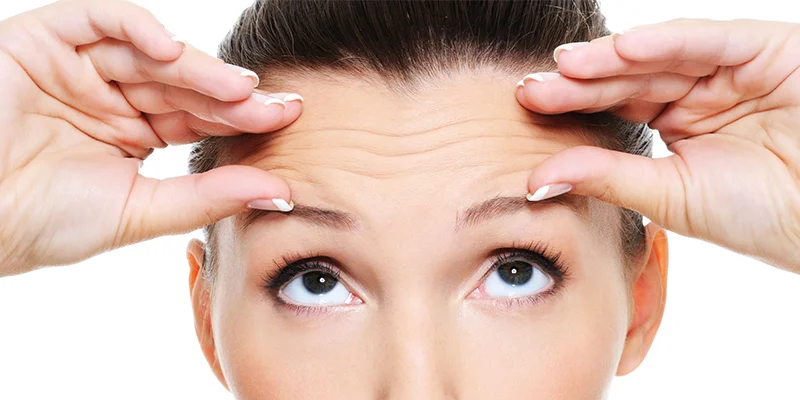
These are creases that run side to side across the forehead. They’re created by the frontalis, the only muscle that lifts your eyebrows. Each time it contracts, the skin above it folds into horizontal bands.
They’re often confused with frown lines, but the two are different:
| Horizontal Forehead Lines | Frown Lines (“11s”) | |
|---|---|---|
| Direction | Side to side, across the forehead | Vertical, between the eyebrows |
| Muscle responsible | Frontalis (lifts the brows) | Corrugator and procerus (pull brows down and together) |
| Triggered by | Surprise, concentration, raising brows | Frowning, squinting, worry |
| Treatment | Similar options, but dosing and technique differ by area | Similar options, but dosing and technique differ by area |
What Causes Horizontal Forehead Lines?
Several factors usually work together:
- Repeated expressions: raising your eyebrows when talking, reading, or concentrating folds the same skin thousands of times a day
- Natural aging: collagen and elastin decline, so creases no longer smooth out when the muscle relaxes
- Sun exposure: UV radiation breaks down collagen and elastin faster, which is why the sun-exposed forehead ages early
- Smoking: reduces blood flow to the skin and speeds up collagen breakdown
- Lifestyle factors: poor sleep, chronic stress, and dehydration can make lines look more pronounced
- Skincare habits: harsh products that damage the skin barrier, or skipping sunscreen
When Your Eyelids Make Your Forehead Work Harder
There’s one cause that many people never consider: heavy or drooping upper eyelids.
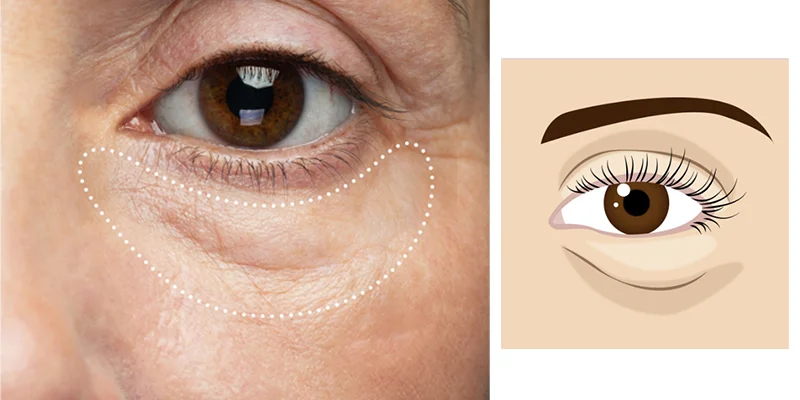
When the upper eyelids sag, from mild ptosis or excess eyelid skin, the frontalis muscle often contracts unconsciously all day to lift the brows and clear your field of vision. That constant lifting carves deep creases, sometimes on only one side.
A study presented at the American Society of Plastic Surgeons (ASPS) meeting looked at 160 patients over 50. Eyelid ptosis was found in 90% of those with fixed forehead lines, compared with about 77% of those without. Every patient with lines on only one side had a drooping eyelid on that same side. The study shows an association rather than proof of cause, but it has two practical implications:
- Botox alone can backfire in these patients: relaxing the forehead removes the “lift,” and the brows and eyelids can feel heavier
- Treating the eyelid may reduce the forehead’s workload, so an eyelid assessment should be part of the plan
If you notice that you raise your eyebrows to see clearly, or your lines are deeper on one side, ask your doctor to check your eyelids. Keangnam Korea’s Perfect Eyes eyelid service addresses excess eyelid skin and drooping lids.
Early Lines or Established Lines?
Look in a mirror with your face relaxed, then raise your eyebrows.
- Lines only appear when you move: they’re dynamic and still early. Skincare and prevention work well.
- Lines remain when your face is relaxed: they’re static and established. You’ll likely need professional treatment, plus skincare to maintain results.
Treating Early Horizontal Forehead Lines
At the early stage, the goal is to protect collagen and keep the skin resilient:
- A retinoid at night, which has the strongest evidence for fine lines
- Antioxidants such as vitamin C and vitamin E in the morning
- Hydrating ingredients such as hyaluronic acid and ceramides
- Broad-spectrum SPF 30+ sunscreen every day
- Sleep, stress management, and not smoking
We’ve put together a complete step-by-step routine, including how to start retinol safely, in our guide to treating forehead wrinkles at home.
Pro Tip: Forehead massage and facial exercises feel relaxing, but there’s no evidence they build collagen. Repeatedly moving the forehead can even reinforce the creases. Spend that time on sunscreen and a retinoid instead.
Professional Treatments for Deeper Horizontal Forehead Lines
Once lines are visible at rest, a doctor can choose from several treatments. Each works on a different layer of the problem, which is why combinations are common.
1. Botox (Botulinum Toxin)
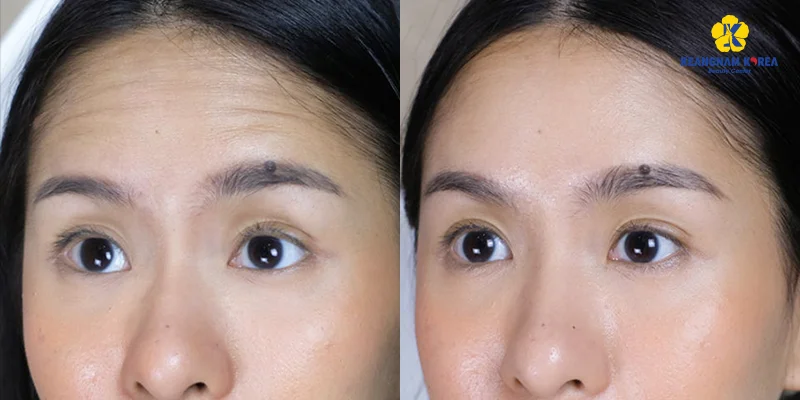
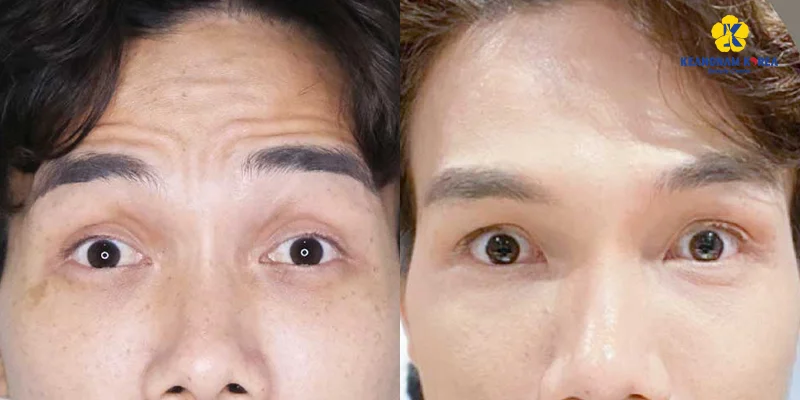
Botox temporarily relaxes the frontalis so it stops folding the skin. It’s the most effective option for lines caused by muscle movement.
- Results appear within about 5–7 days
- Effects typically last 3–4 months
- Possible side effects include headache, bruising, and temporary brow or eyelid heaviness
Because the frontalis is your only brow elevator, dosing must be precise. Too much product can leave brows flat or heavy, especially if you have heavy eyelids.
2. Dermal Fillers
Very soft hyaluronic acid (HA) fillers can be injected into the superficial layer of the skin to soften static lines that remain after Botox. Products designed for fine lines, such as Belotero Balance or Juvéderm Volbella, are typically used.
- Results are immediate
- Typically last around 9–15 months in the forehead
- Higher risk area: the forehead has little soft tissue and contains blood vessels connected to the eyes. Rarely, filler can block a vessel, causing skin damage or vision loss
Forehead filler should only be performed by an experienced doctor using a very soft product, with hyaluronidase on hand to dissolve filler in an emergency.
3. Laser Resurfacing
Lasers deliver controlled heat to remove damaged surface layers or create microscopic injury columns (fractional lasers), triggering new collagen.
- Results develop gradually over 3–6 months as collagen remodels
- Results can last years with good sun protection
- Downtime ranges from a few days of redness (non-ablative) to a week or more (ablative)
- Darker or Asian skin types need careful settings to avoid post-inflammatory pigmentation
4. Microfocused Ultrasound (Ultherapy)
Ultherapy delivers focused ultrasound energy into deeper tissue to stimulate collagen. It’s FDA-cleared to lift the eyebrows, not specifically to erase forehead wrinkles.
- Improvements build over about 3 months
- Usually no downtime; temporary warmth or tingling during treatment
- Best for people whose brows have started to descend, since a slightly lifted brow means the forehead has to work less
5. Mesotherapy and Skin Regeneration Treatments
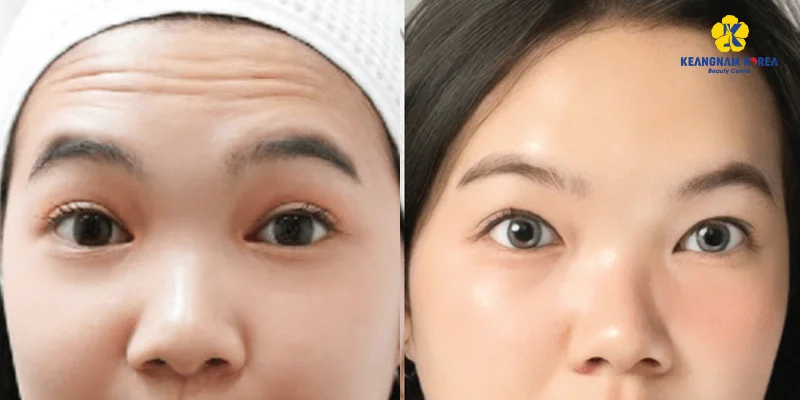
These treatments aim to improve skin quality, hydration, and firmness rather than block muscle movement. At Keangnam Korea, options include the needle-free Meso SPI for mild to moderate lines, and Reborn Cell Extra+, which, according to the clinic, uses Nano Pal-Max micro-fibers to deliver Exosome into deeper skin layers to support collagen production.
They’re especially useful alongside Botox for static lines, because they target the crease and the skin quality that muscle relaxation can’t fix. Learn more about Reborn Cell Extra+.
Comparing Treatments for Horizontal Forehead Lines
| Treatment | Best For | Results Appear | Typical Duration | Downtime | Key Consideration |
|---|---|---|---|---|---|
| Botox | Dynamic lines | 5–7 days | 3–4 months | Minimal | Precise dosing to avoid heavy brows |
| HA filler | Static lines after Botox | Immediate | 9–15 months | Minimal | Higher-risk area; experienced doctor only |
| Laser resurfacing | Static lines, texture | Gradual, 3–6 months | Years, with sun protection | Days to 1+ week | Pigmentation risk in darker skin |
| Ultherapy | Early brow descent | Gradual, ~3 months | Varies with aging | Usually none | Lifts brows; not a wrinkle eraser |
| Skin regeneration (Meso SPI, Reborn Cell Extra+) | Skin quality, fine to moderate lines | Gradual | Varies; maintenance advised | Minimal | Works best combined with other options |
Pro Tip: For established lines, the most natural results usually come from a combination plan: Botox to soften movement, a regenerative or resurfacing treatment for the crease, and daily sunscreen and a retinoid to maintain results.
Common Mistakes When Treating Horizontal Forehead Lines
- Getting Botox without an eyelid check. If your forehead is compensating for heavy lids, Botox can make your eyes feel heavier.
- Choosing the cheapest forehead filler. The forehead is a high-risk area; the injector’s experience matters more than the price.
- Expecting one treatment to fix everything. Muscle movement, collagen loss, and sun damage each need a different approach.
- Stopping sunscreen after treatment. UV exposure undoes collagen-building results.
- Over-treating. A completely frozen forehead looks unnatural; good results still allow some expression.
Aftercare and Prevention After Treatment
To keep your results longer:
- Wear SPF 30+ sunscreen every day, plus sunglasses to reduce squinting
- Notice habits such as raising your eyebrows while talking or reading screens
- Don’t smoke, and keep alcohol moderate
- Eat a balanced diet with plenty of fruits and vegetables, and prioritize sleep
- Continue your retinoid, antioxidants, and moisturizer
- Follow your doctor’s specific aftercare, for example, not rubbing the forehead or lying down for a few hours after Botox
Frequently Asked Questions
Why do I have horizontal forehead lines in my 20s?
Expressive habits, frequent eyebrow raising, sun exposure, and genetics can cause these lines to appear early. Heavy eyelids can also make the forehead muscle work harder.
Can horizontal forehead lines go away on their own?
Early dynamic lines can soften with sunscreen, retinoids, and better habits, but established static lines don’t disappear without treatment.
Is Botox or filler better for forehead lines?
Botox is usually the first choice for lines caused by movement. Soft filler is sometimes added for static lines that remain, but the forehead is a higher-risk area for filler.
What’s the difference between forehead lines and frown lines?
Forehead lines run horizontally and come from the muscle that lifts the brows. Frown lines are vertical lines between the eyebrows, caused by the muscles that pull the brows together.
Can eyelid surgery reduce forehead lines?
If your forehead lines are linked to drooping eyelids, correcting the eyelids may reduce how much your forehead has to work. Research shows a clear association, but results vary, so a doctor should assess you first.
Find the Real Cause of Your Forehead Lines
The best treatment depends on whether your lines come from muscle movement, collagen loss, sun damage, heavy eyelids, or a mix. A doctor’s assessment helps you avoid treatments that don’t match the cause.
Want to know what’s behind your horizontal forehead lines? Call our hotline at +84 911 833 555 for a quick consultation with our doctors and a personalized treatment plan.
FREE CONSULTATION