Discover why acne scars and post-inflammatory hyperpigmentation require individualized treatment planning. Keangnam Korea continues to follow emerging trends in aesthetic dermatology.

Nội dung
- Why Personalized Treatment Matters for Acne Scars and Post-Inflammatory Hyperpigmentation
- Understanding the Difference Between Scars and PIH
- Modern Dermatology Favors Individualized Treatment Planning
- Combining Clinical Techniques Requires Careful Planning
- Continuing Education Supports Better Clinical Decisions
- Frequently Asked Questions
Why Personalized Treatment Matters for Acne Scars and Post-Inflammatory Hyperpigmentation
Healthy skin recovery involves much more than simply treating visible marks. After acne or other inflammatory skin conditions, many individuals experience a combination of acne scarring and post-inflammatory hyperpigmentation (PIH).
Although these concerns often appear together, they represent different biological changes within the skin. One affects skin texture, while the other changes skin pigmentation.
This distinction has led dermatologists to increasingly emphasize personalized treatment planning rather than relying on a single technique for every patient.
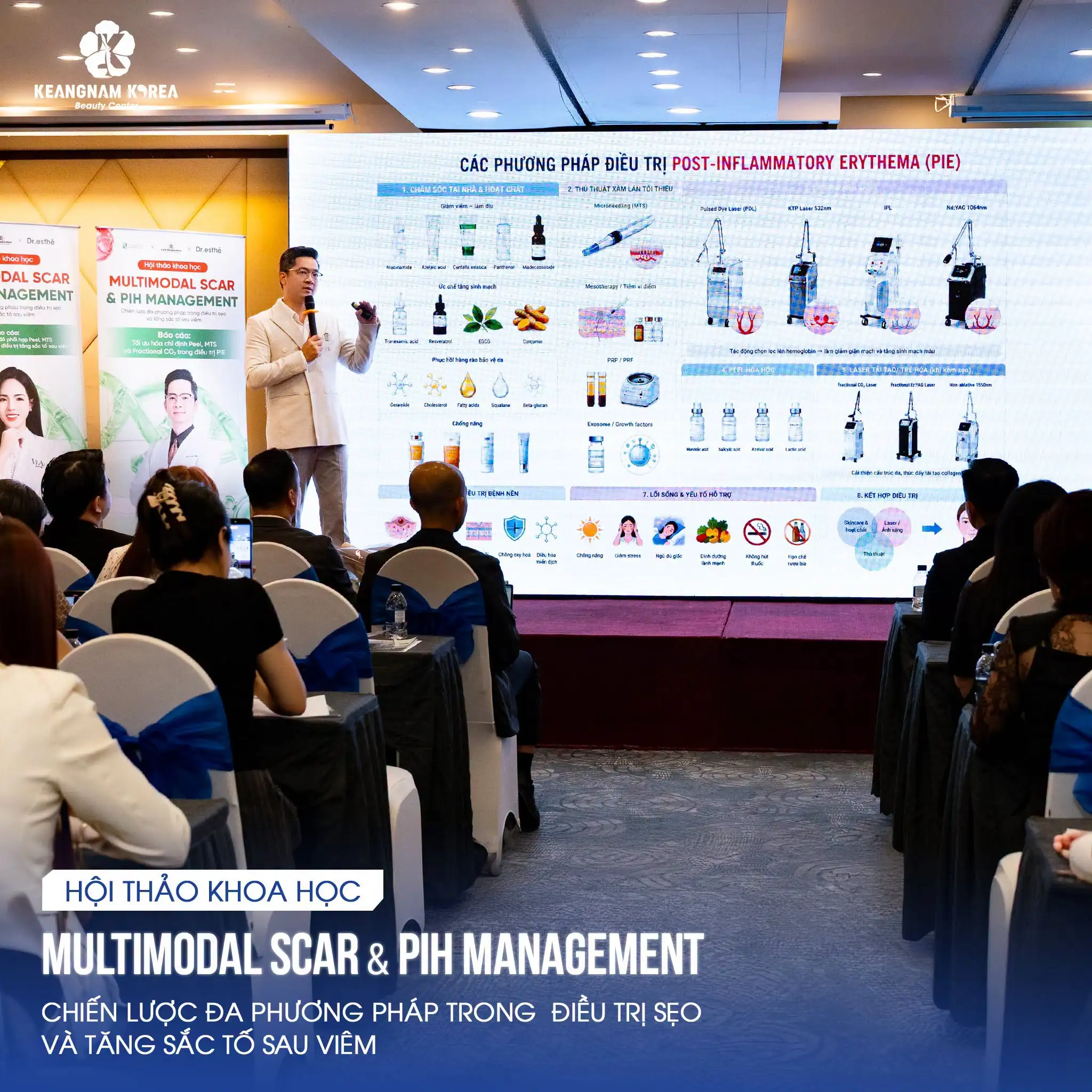
As part of its commitment to continuous professional development, Keangnam Korea recently joined the scientific symposium “Multimodal Scar & PIH Management,” where leading dermatologists explored evolving strategies for individualized acne scar and pigmentation management.

Understanding the Difference Between Scars and PIH
From a clinical perspective, acne scars and PIH require separate evaluation.
Acne scars develop when inflammation alters the skin’s structural support during the healing process. Depending on the severity of tissue damage, different scar patterns may develop.
Post-inflammatory hyperpigmentation, however, occurs when inflammatory processes stimulate excess melanin production, leaving darker patches even after acne has resolved.
Because these conditions involve different biological mechanisms, treatment planning typically begins with identifying which concern is most prominent before considering appropriate management options.
Modern Dermatology Favors Individualized Treatment Planning
A major theme discussed during the symposium was the growing importance of personalized clinical assessment.
Rather than applying identical procedures to every patient, clinicians increasingly evaluate multiple variables, including:
- Scar morphology
- Distribution of pigmentation
- Skin phototype
- Skin sensitivity
- Previous treatment history
- Individual healing response
This patient-centered philosophy helps clinicians determine which treatment modalities may be appropriate and when they should be introduced.
Combining Clinical Techniques Requires Careful Planning
Educational sessions also explored commonly discussed modalities in aesthetic dermatology, including:
- Chemical peels
- Microneedling (MTS)
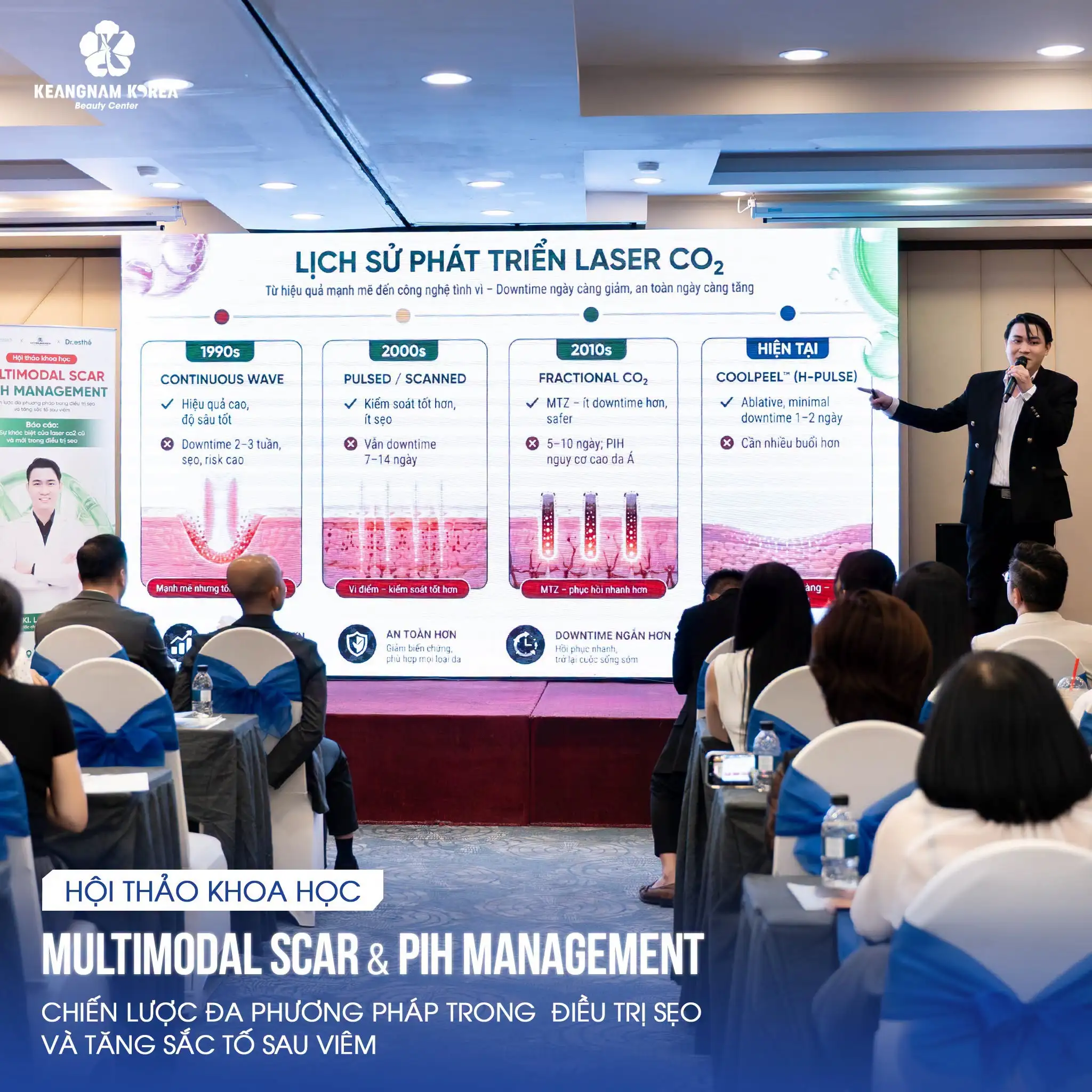
- Fractional CO₂ laser technology
- Sequential treatment planning
- Long-term scar management strategies
Speakers emphasized that combining techniques is not simply about performing more procedures.
Instead, successful multimodal management depends on careful timing, clinical judgment, and individualized treatment sequencing based on each patient’s skin condition.
Continuing Education Supports Better Clinical Decisions
Scientific meetings remain an important resource for physicians seeking to remain current with rapidly evolving dermatology research.
During the symposium, Keangnam Korea’s medical team participated in discussions involving:
- Case-based clinical learning
- Evidence-informed dermatology
- Scar assessment principles
- Emerging treatment concepts
- Practical decision-making in aesthetic medicine
These educational opportunities help clinicians expand their knowledge while maintaining a thoughtful, evidence-informed approach to patient care.

Keangnam Korea’s Commitment to Lifelong Medical Learning
In aesthetic medicine, technology alone does not define quality care.
Ongoing education, critical evaluation of scientific evidence, and professional collaboration all contribute to responsible clinical practice.
Keangnam Korea continues to invest in:
- International medical education
- Scientific symposiums
- Clinical knowledge sharing
- Continuous professional development
- Evidence-based aesthetic dermatology
This commitment allows the clinic to remain informed about developments in skin science while supporting individualized patient consultations.
Frequently Asked Questions
Why do acne scars and pigmentation require different treatment strategies?
Because they involve different biological processes. Acne scars affect the skin’s structure, while post-inflammatory hyperpigmentation primarily affects melanin production.
What does multimodal treatment mean?
Multimodal treatment refers to developing a personalized management strategy that may involve different therapeutic approaches selected according to an individual’s skin condition rather than relying on a single procedure.
Why is individualized skin assessment important?
Each person’s skin type, scar pattern, pigmentation, and healing response are unique. A comprehensive assessment helps clinicians determine the most appropriate treatment sequence for each patient.
- IMCAS Asia 2026: Keangnam Korea Updates on the Latest Global Aesthetic Trends
- Keangnam Korea Strengthens Expertise in Advanced Eye & Midface Rejuvenation
- Keangnam Korea Expands Global Collaboration Through IMCAS Asia 2026 and Asterasys Partnership
- International Collaboration and Innovation: The Future of Aesthetic Medicine After IMCAS Asia 2026