The earliest signs of melasma are flat, symmetrical brown or gray-brown patches on the cheeks, forehead, nose, upper lip, or chin that darken after sun exposure. Melasma doesn’t itch, hurt, or change your skin’s texture. Spotting these signs of melasma early and starting strict sun protection right away gives treatment its best chance of working.
Melasma rarely appears overnight. It usually starts as a faint shadow you can only see in certain light, then slowly deepens and spreads with every summer, every hormonal shift, and every unprotected day outdoors.
The earlier you recognize it, the easier it is to manage. This guide from Keangnam Korea walks you through what melasma actually looks like, how to tell it apart from freckles and sun spots, what you can safely do at home, and when it’s time to see a doctor.

Nội dung
- What Is Melasma, and Why Do Early Signs of Melasma Matter?
- 5 Early Signs of Melasma to Watch For
- Melasma vs. Freckles vs. Sun Spots: How to Tell Them Apart
- Who Is Most Likely to Notice Signs of Melasma?
- What to Do at Home When You Notice Signs of Melasma
- Common Mistakes That Make Melasma Worse
- Professional Treatment Options at a Glance
- When to See a Dermatologist
- Frequently Asked Questions
- How Keangnam Korea Approaches Melasma
What Is Melasma, and Why Do Early Signs of Melasma Matter?
Melasma is a common, long-lasting pigmentation disorder. Pigment-producing cells in the skin (melanocytes) become overactive and produce excess melanin, which collects in patches on sun-exposed areas, mostly the face.
The main triggers are well documented:
- Sunlight, including both UV rays and visible light
- Hormones, especially pregnancy, birth control pills, and hormone therapy
- Genetics, since many people with melasma have a close relative with it
- Certain medications that make skin more sensitive to light
- Heat and inflammation, which can make existing patches darker
Around 90% of people with melasma are women, and it’s most common in women of reproductive age, typically starting somewhere between the 20s and 40s. Asian skin and medium-to-darker skin tones are more prone to it. Men can develop melasma too.
Expert Insight: Melasma Is More Than “Extra Pigment”
Research now shows that skin affected by melasma also carries signs of chronic sun damage: broken-down elastic fibers (solar elastosis), more blood vessels, and a weakened layer between the epidermis and dermis. Melasma-affected skin also has a less resilient barrier that recovers more slowly after irritation.
This explains two things patients often find frustrating. First, why melasma keeps coming back even after it fades. Second, why harsh treatments can make it worse. Effective care treats the whole skin environment, not just the color.
Melasma can also sit at different depths. Pigment in the top layer (epidermal) tends to respond better to topical treatment, while deeper (dermal) or mixed melasma is more stubborn. A dermatologist can estimate the depth during an in-person exam.
5 Early Signs of Melasma to Watch For
1. Uneven Skin Tone in Sun-Exposed Areas
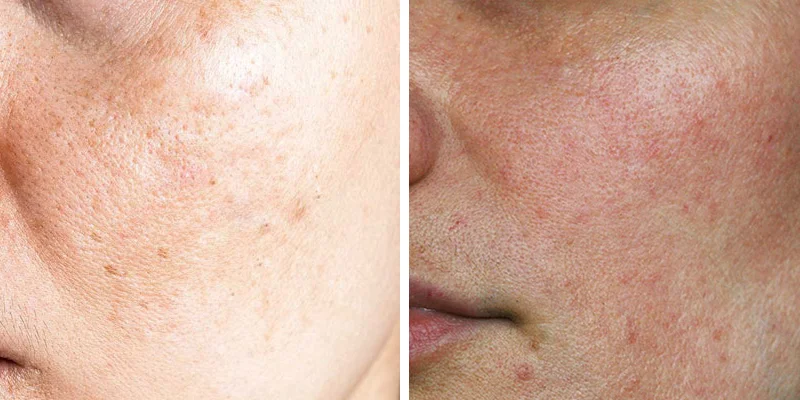
One of the very first signs of melasma is a subtle unevenness: an area of skin that looks slightly duller or darker than the skin around it. At this stage it can be easy to mistake for tiredness or a shadow.
Pay closest attention to the cheekbones, bridge of the nose, forehead, chin, and upper lip. These are the areas that catch the most light.
2. Brown or Gray-Brown Patches That Mirror Each Other
As melasma develops, the faint unevenness becomes a defined patch. Patches are usually light to dark brown, and can look bluish-gray on darker skin tones.
A key clue is symmetry. Melasma tends to appear on both sides of the face in a similar pattern, for example on both cheeks. Patches have irregular, map-like shapes and can gradually join together into larger areas.
3. Patches That Darken After Sun, Heat, or Hormonal Changes
Melasma reacts to its triggers. If a patch looks noticeably darker after a beach holiday, a hot summer, starting a new birth control pill, or during pregnancy, that’s a strong sign of melasma rather than a fixed mark.
The reverse is also true: patches often look lighter after a few months of strict sun protection.
4. Skin That Feels More Reactive Than Before
Many people with melasma, particularly in East Asia, report that the affected areas sting, redden, or flare more easily with strong skincare or sun exposure. In one study of 411 Korean patients, about 61% described this kind of sensitivity.
This happens because melasma-affected skin has a weaker barrier that recovers more slowly. If your cheeks suddenly react to products you’ve used for years, treat it as a signal to simplify your routine.
5. Patches Appearing Beyond the Cheeks
Melasma isn’t limited to the classic “butterfly” area. It can show up on the upper lip (sometimes mistaken for a shadow or facial hair), along the jawline, on the neck, and less commonly on the forearms.
If you notice similar patches in more than one of these areas, mention all of them to your doctor. The pattern helps with diagnosis.
Pro Tip: Take a photo of your face in the same spot by a window, in natural daylight, once a month. Melasma changes slowly, and side-by-side photos make it far easier to see whether patches are spreading or fading than looking in the mirror each day.
Common Mistake: Treating Rough, Scaly Patches as Melasma
Melasma is flat. It changes the color of your skin, not its texture. It doesn’t cause itching, pain, scaling, or raised bumps.
If a dark patch feels rough, flakes, bleeds, grows quickly, or looks different from your other spots, it is not one of the typical signs of melasma. It needs a proper medical check, because other skin conditions can look similar at first glance.
Melasma vs. Freckles vs. Sun Spots: How to Tell Them Apart
Many people let melasma spread because they assume it’s “just freckles.” Here’s how the three most common dark marks compare:
| Melasma | Freckles | Sun Spots (Solar Lentigines) | |
|---|---|---|---|
| Size | Large patches, can merge | Small dots, about 1–5 mm | Small to medium, single spots |
| Shape | Irregular, map-like | Round, scattered | Oval, well-defined |
| Pattern | Symmetrical on both sides | Spread across the face, even less sun-exposed areas | Wherever sun damage built up |
| Color | Light to dark brown or gray-brown | Light, even brown | Tan to dark brown |
| Typical onset | Adults, often women aged 20–40 | Childhood | Usually middle age onward |
| Main trigger | Sunlight plus hormones | Genetics plus sun | Cumulative sun exposure |
If you’re still unsure which one you have, a dermatologist can usually tell by examining your skin, sometimes with a special lamp or magnifier.
BOOK A DOCTOR CONSULTATION
FREE CONSULTATION
Who Is Most Likely to Notice Signs of Melasma?
You’re at higher risk if you:
- Are a woman, especially of reproductive age
- Are pregnant, or take birth control pills or hormone therapy
- Have Asian, Hispanic, Middle Eastern, or other medium-to-darker skin tones
- Have a parent or sibling with melasma
- Live in a sunny, hot climate or spend a lot of time outdoors
- Take medications that increase sun sensitivity
That said, melasma can appear at any age and in any gender. Whether you’re 25 or 55, it’s worth keeping an eye on your skin.
What to Do at Home When You Notice Signs of Melasma
Melasma can’t be “cured” permanently, but it can be controlled and lightened. These steps form the foundation of every treatment plan, at home or in a clinic.
Step 1: Make Sun Protection Non-Negotiable
This is the single most important step.
- Use a broad-spectrum sunscreen, SPF 50+ and PA+++ or higher, every morning, rain or shine
- Choose a tinted sunscreen containing iron oxides, which also blocks visible light, a known trigger for melasma
- Reapply every 2 hours when outdoors, and after sweating
- Add physical protection: a wide-brimmed hat, sunglasses, and shade
Phone and computer screens give off very little UV, so they aren’t the main concern. Daylight through windows and time outdoors matter far more.
Step 2: Cleanse Gently and Protect Your Barrier
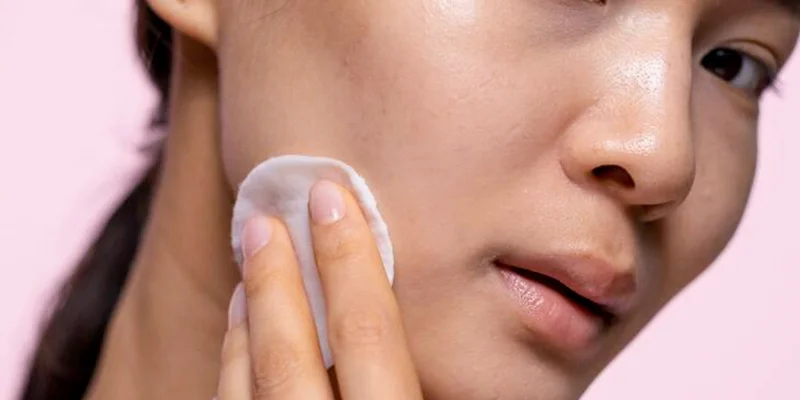
Use a mild, fragrance-free cleanser morning and night, and remove sunscreen and makeup thoroughly. Skip rough scrubs and cleansing brushes. A fragrance-free moisturizer helps support the skin barrier, which is already weaker in melasma-prone skin.
Step 3: Use Evidence-Backed Brightening Ingredients
Several over-the-counter ingredients have reasonable evidence for fading pigment:
- Azelaic acid: studies show 20% azelaic acid can perform comparably to 4% hydroquinone
- Niacinamide: calms the skin and reduces pigment transfer
- Vitamin C: antioxidant that supports even tone
- Topical tranexamic acid, kojic acid, and arbutin: often used in combination products
Some of the most effective treatments are prescription-only in many countries and should be used under a doctor’s supervision:
- Hydroquinone: a long-standing first-line treatment
- Tretinoin (a prescription retinoid)
- Triple combination cream (hydroquinone, tretinoin, and a mild corticosteroid), generally used short-term
Never apply corticosteroid creams on your own to “lighten” melasma. Long-term unsupervised use can thin the skin and cause other problems.
Step 4: Support Your Skin From Within
A balanced diet rich in fruits, vegetables, and omega-3 fats supports overall skin health. Avoid smoking, keep alcohol moderate, prioritize sleep, and find ways to manage stress, which many patients report as a trigger for flare-ups.
Pro Tip: Be patient. Even with a consistent plan, the American Academy of Dermatology notes it usually takes 3 to 12 months to see results. Don’t switch products every few weeks; give each routine time to work.
Common Mistakes That Make Melasma Worse
- Over-exfoliating or scrubbing. Irritation triggers more pigment production and can leave additional dark marks.
- DIY remedies like lemon juice, garlic, or toothpaste. These irritate the skin and often make patches darker.
- Buying unlabeled “whitening” creams. Some contain hidden steroids or harmful ingredients that damage skin over time.
- Skipping sunscreen on cloudy days or indoors near windows. Visible light and UVA still reach your skin.
- Stopping care once patches fade. Melasma is chronic and recurs easily; maintenance matters.
- Jumping straight to aggressive laser treatments. Strong heat-based procedures without proper assessment can cause rebound darkening.
Professional Treatment Options at a Glance
When home care isn’t enough, a dermatologist may combine several approaches:
| Approach | How It Works | Things to Know |
|---|---|---|
| Prescription topicals | Slow melanin production | First-line option; needs medical supervision |
| Oral tranexamic acid | Reduces pigment signaling and blood vessel activity | Prescription only; not suitable for people with clotting risks |
| Chemical peels | Remove pigmented surface cells | Gentle superficial peels preferred; irritation risk |
| Low-energy lasers and light | Break down pigment gradually | Must be conservative to avoid rebound |
| In-clinic skin regeneration treatments | Improve the overall skin environment | Results vary by melasma depth and skin type |
No single treatment works for everyone, and combinations usually outperform any one method alone.

When to See a Dermatologist
Book a professional assessment if:
- Dark patches appear for the first time, or change in size, shape, or color
- A spot is raised, rough, itchy, or bleeding
- You’ve followed strict sun protection and a gentle routine for about 3 months with no improvement
- You’re pregnant, breastfeeding, or on hormone therapy and want safe options
- You’re unsure whether you’re seeing signs of melasma or another condition
An early diagnosis means a simpler, gentler treatment plan.
BOOK A DOCTOR CONSULTATION
FREE CONSULTATION
Frequently Asked Questions
What are the first signs of melasma?
The first signs of melasma are usually faint, uneven darkening on the cheeks, forehead, nose, or upper lip that becomes more visible after sun exposure. Over time these turn into symmetrical brown or gray-brown patches.
Can melasma go away on its own?
Sometimes. Melasma linked to pregnancy or birth control pills may fade after delivery or after stopping the medication. For many people, though, it’s a long-term condition that needs ongoing sun protection and treatment.
Is melasma dangerous?
Melasma itself is harmless and isn’t skin cancer. However, any new or changing dark spot should be checked by a doctor to rule out other conditions.
Can men get melasma?
Yes. About 1 in 10 people with melasma are men. The signs of melasma look the same, and treatment follows the same principles.
How long does it take for melasma to fade?
With consistent sun protection and treatment, most people see improvement within 3 to 12 months. Melasma can return, so a maintenance routine is important.
How Keangnam Korea Approaches Melasma
At Keangnam Korea, every melasma case starts with a doctor-led skin assessment to identify the pattern, likely depth, and triggers of your pigmentation. That assessment determines the plan, rather than a one-size-fits-all package.
For patients who want in-clinic support alongside daily sun protection, the clinic offers Dermazeen, an Exosome-based treatment for pigmentation, and Reborn Cell Extra+, which combines Exosome actives with Nano Pal-Max micro-fiber technology for broader skin rejuvenation.
→ Learn more: Dark spots treatment at Keangnam Korea / Comparing the two melasma treatments
Results depend on each person’s skin, and melasma always needs ongoing sun protection to stay under control.
Noticed early signs of melasma? Contact our hotline at +84 911 833 555 to have your skin examined by our dermatology team and get a treatment plan suited to you.
FREE CONSULTATION