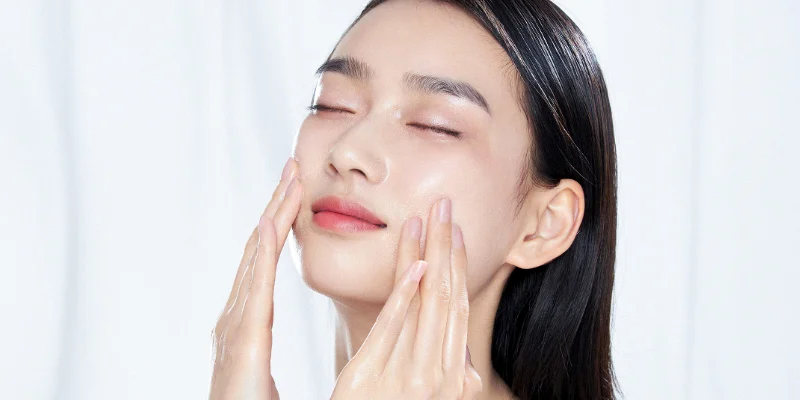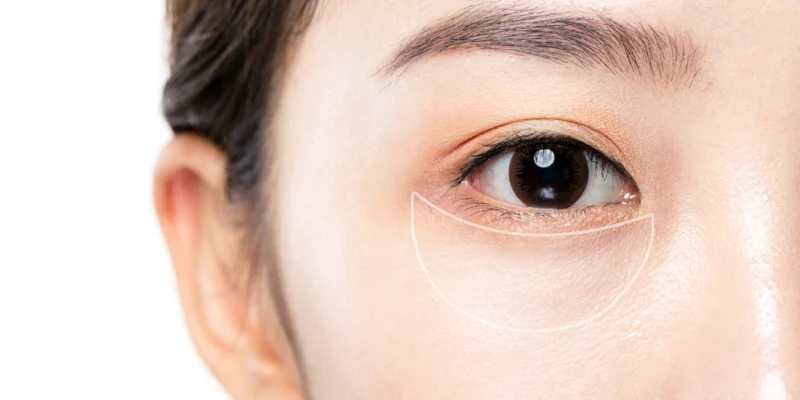
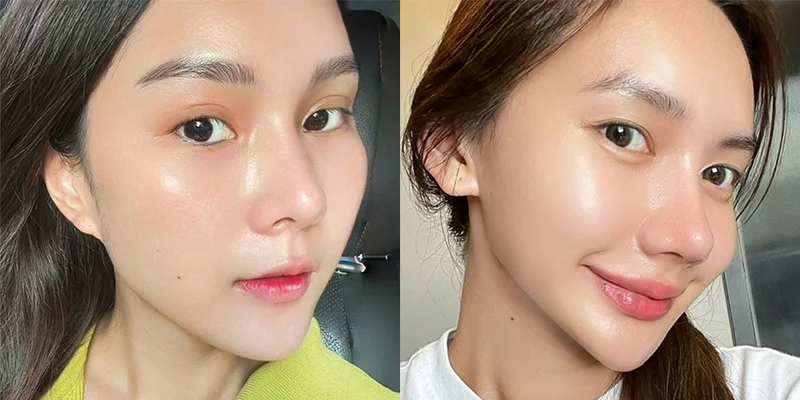
In the needle vs needle-free mesotherapy debate, neither is simply “better.” Needle mesotherapy places actives precisely in the dermis and usually works in fewer sessions, but causes brief swelling or bruising. Needle-free mesotherapy is gentler, faster, and has almost no downtime, but delivers less product per session. Your skin concern, comfort, and schedule decide.
Mesotherapy used to mean dozens of tiny injections. Today, many clinics also offer needle-free versions that use devices instead of needles. That leaves many patients asking the same question: which one should I choose?
This guide compares needle vs needle-free mesotherapy side by side: how each works, what the procedure feels like, how aftercare differs, and which suits your skin. If you’re new to the treatment, start with what mesotherapy is and who should get it.
Nội dung
- The Two Techniques in Brief
- Needle vs Needle-Free Mesotherapy at a Glance
- How the Procedures Compare Step by Step
- Aftercare: How Different Is It?
- When Needle Mesotherapy Is the Better Choice
- When Needle-Free Mesotherapy Is the Better Choice
- Which Is Safer?
- What About Cost and Sessions?
- Needle and Needle-Free Mesotherapy at Keangnam Korea
- Common Mistakes When Choosing Between Needle and Needle-Free
- Frequently Asked Questions
- Not Sure Which Is Right for You?
The Two Techniques in Brief
Needle Mesotherapy
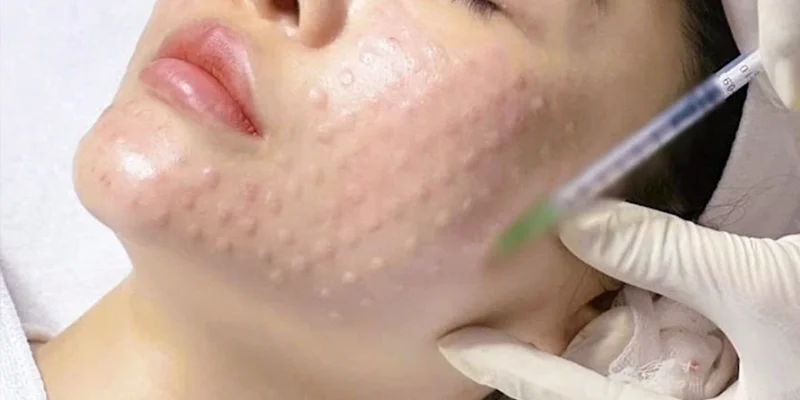
A doctor uses ultra-fine needles to deliver small amounts of active ingredients, such as hyaluronic acid, vitamins, PDRN, or Exosome, into the dermis at many points across the face. It can be done:
- By hand, where the doctor controls depth, angle, and spacing at each point
- With an injector gun, which delivers more uniform micro-doses
Results depend heavily on the doctor’s skill, because depth and spacing determine both effectiveness and comfort.
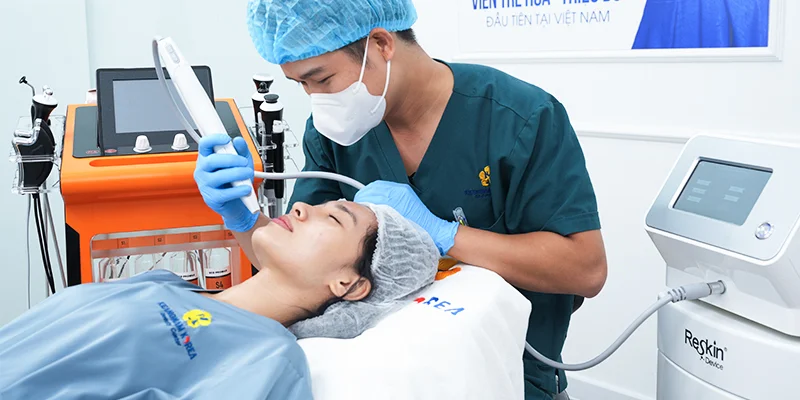
Needle-Free Mesotherapy
Devices push actives into the skin without puncturing it. Common technologies include:
- Electroporation: short electrical pulses temporarily open tiny channels in the skin
- Iontophoresis: a mild current moves charged molecules into the skin
- Ultrasound (sonophoresis): sound waves increase skin permeability
- Pressure or jet systems: high pressure drives the serum into the skin
Because there are no needles, there are no puncture marks, and treatment is typically painless or feels like a light tingling.
Needle vs Needle-Free Mesotherapy at a Glance
| Needle Mesotherapy | Needle-Free Mesotherapy | |
|---|---|---|
| Delivery | Directly into the dermis | Through the skin surface, assisted by a device |
| Precision | High; dose and depth adjusted point by point | Even coverage, less control over depth |
| Comfort | Mild stinging; numbing cream usually applied | Typically painless; possible light tingling |
| Session time | About 1 hour including numbing | About 30–50 minutes |
| Downtime | Small bumps, redness, or bruising for 1–3 days | Usually none |
| Number of sessions | Fewer | Usually more, sometimes 8–10 plus maintenance |
| Best for | Dehydration, fine lines, targeted concerns, complex skin | Sensitive skin, needle-shy patients, maintenance, busy schedules |
| Cost per session | Often lower | Often higher, due to equipment |
Expert Insight: Why Delivery Depth Matters
The outer layer of the skin is an excellent barrier. Dermatology research has long described a “500 Dalton rule”: molecules larger than roughly 500 Daltons don’t pass through intact skin on their own. Many mesotherapy actives, including hyaluronic acid and growth factors, are far larger than that.
Needles bypass the barrier entirely, placing the active exactly where collagen-producing cells live. Needle-free devices temporarily increase permeability, but less product reaches the deeper layers per session. That’s why needle-free mesotherapy is best for improving overall skin quality and maintaining results, while needle mesotherapy tends to work faster for targeted concerns.
How the Procedures Compare Step by Step
| Step | Needle Mesotherapy | Needle-Free Mesotherapy |
|---|---|---|
| 1 | Doctor consultation, skin analysis, and photos | Doctor consultation, skin analysis, and photos |
| 2 | Makeup removal and cleansing | Makeup removal and cleansing |
| 3 | Numbing cream for about 20–30 minutes | No numbing needed |
| 4 | Skin disinfection | Skin preparation, sometimes gentle exfoliation |
| 5 | Micro-injections across the treatment area | Serum applied, device passed over the skin |
| 6 | Soothing mask to calm the skin | Soothing or hydrating mask |
| 7 | Doctor checks the skin and gives aftercare advice | Doctor checks the skin and gives aftercare advice |
| 8 | Follow-up session scheduled | Follow-up session scheduled |
Aftercare: How Different Is It?
| After Needle Mesotherapy | After Needle-Free Mesotherapy | |
|---|---|---|
| First hours | Avoid touching the skin; then cleanse gently | Normal routine, gentle products |
| Makeup | Wait until tiny marks have closed, usually the next day | Usually fine the same day |
| Exercise, sauna, swimming | Avoid for about 2–3 days | Usually fine after 24 hours |
| Actives (acids, retinol, vitamin C) | Pause for a few days | Pause for 1–2 days |
| Sun protection | Essential | Essential |
Whatever the technique, follow your doctor’s specific instructions. Our mesotherapy side effects and safety guide covers standard aftercare in more detail.
Pro Tip: Many patients get the best of both worlds by starting with a course of needle mesotherapy to correct a concern, then switching to needle-free sessions for maintenance.
When Needle Mesotherapy Is the Better Choice
Choose needle mesotherapy if you:
- Want the most targeted results for dehydration, fine lines, or specific areas
- Have complex skin that needs different doses or depths in different zones
- Prefer fewer sessions overall
- Don’t mind mild discomfort and a day or two of small bumps or redness
- Are working with a limited budget per session
When Needle-Free Mesotherapy Is the Better Choice
Choose needle-free mesotherapy if you:
- Dislike needles or have a low pain threshold
- Have sensitive skin, assessed by a doctor first
- Need zero downtime for work, events, or travel
- Want a maintenance treatment after a needle course
- Prefer shorter appointments without numbing
If your concern is melasma, both approaches can play a role, but results take months and depend on strict sun protection. See our guide to the signs of melasma for realistic expectations.
Which Is Safer?
When it comes to needle vs needle-free mesotherapy safety, both options are low-risk in a licensed clinic. The risks differ slightly:
- Needle mesotherapy carries the usual injection risks: bruising, swelling, and, rarely, infection or nodules if hygiene or products are poor
- Needle-free mesotherapy avoids puncture-related risks, but devices can still cause irritation or redness if settings are wrong
In both cases, product quality and hygiene matter most. Serious complications are uncommon and usually linked to unlicensed providers or unverified products. Learn the warning signs in our guide to mesotherapy complications.
What About Cost and Sessions?
Needle mesotherapy is often cheaper per session, while needle-free sessions can cost more because of the equipment, and you may need more of them. Always compare the price of the full course. Our guide to mesotherapy cost explains what drives the price.
Needle and Needle-Free Mesotherapy at Keangnam Korea
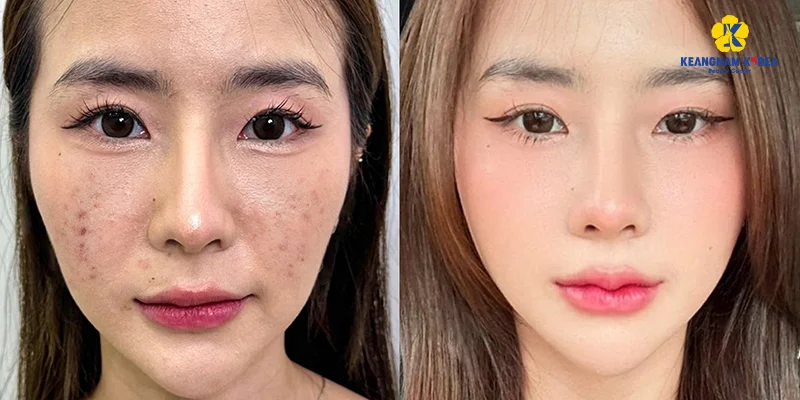
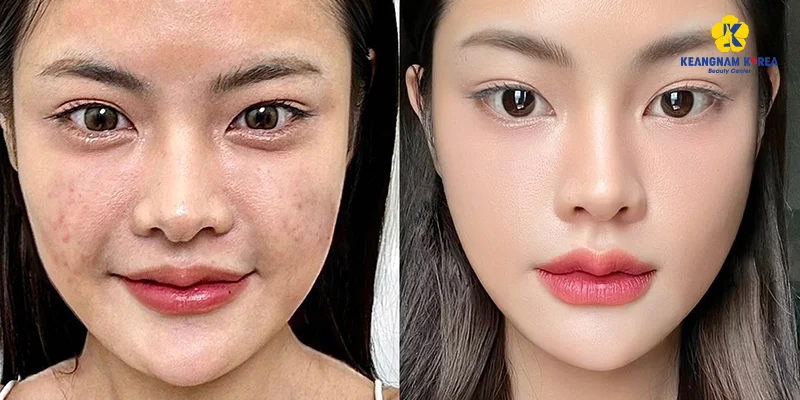
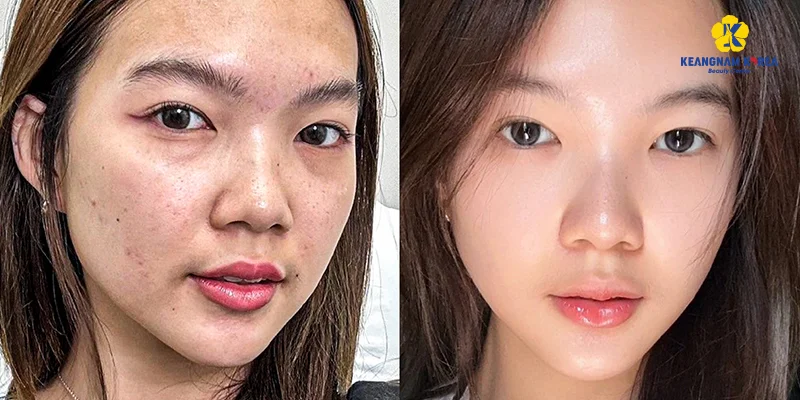
Keangnam Korea, a licensed international aesthetic clinic in Ho Chi Minh City, offers both options. Every plan starts with a doctor’s examination and skin analysis.
- Needle mesotherapy: ultra-fine needles deliver actives such as Exosome into the dermis, with dosage tailored by the doctor
- Meso SPI needle-free: according to the clinic, a 30–50 minute treatment that uses pressure technology to deliver an Exosome cocktail into the skin, with no numbing and no downtime
For more advanced signs of aging, the clinic’s Reborn Cell Extra+ technology combines Exosome with Nano Pal-Max micro-fibers.
Common Mistakes When Choosing Between Needle and Needle-Free
- Choosing needle-free and expecting the same speed of results as injections.
- Choosing needles for an event tomorrow and forgetting the 1–3 days of possible redness.
- Comparing per-session prices instead of full-course costs.
- Skipping the consultation. The right choice depends on your skin, not on a trend.
- Assuming “no needles” means “no aftercare.” Sun protection and gentle skincare still matter.
Frequently Asked Questions
Is needle-free mesotherapy as effective as injections?
For targeted concerns, needle mesotherapy usually works faster because it delivers actives directly into the dermis. Needle-free mesotherapy is effective for overall skin quality and maintenance, but often needs more sessions.
Does needle mesotherapy hurt?
Most people feel mild stinging. Numbing cream is usually applied first, so the treatment is very tolerable.
How long does each session take?
Needle-free sessions usually take 30–50 minutes. Needle sessions take about an hour, including numbing time.
Can I combine needle and needle-free mesotherapy?
Yes. A common approach is a course of needle mesotherapy to correct a concern, followed by needle-free sessions to maintain results.
Which is better for sensitive skin?
Needle-free mesotherapy is usually gentler for sensitive skin, but a doctor should assess your skin first, since devices and actives can still cause irritation.
Not Sure Which Is Right for You?
The best choice between needle vs needle-free mesotherapy depends on your skin concern, comfort level, and schedule. A consultation with a doctor takes the guesswork out of it.
Need help choosing? Contact our hotline at +84 911 833 555 for a consultation with Keangnam Korea’s doctors.
FREE CONSULTATION