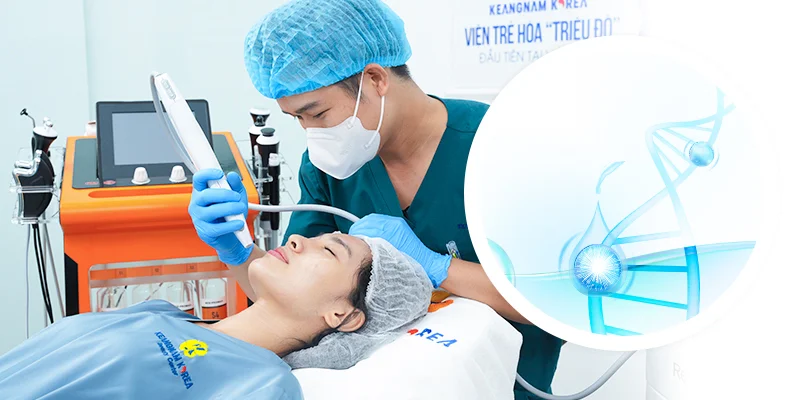
No-needle mesotherapy uses devices, not injections, to help active ingredients pass through the skin. The main technologies are electroporation, iontophoresis, low-frequency ultrasound, and pressure systems, which temporarily make the skin barrier more permeable. No-needle mesotherapy is comfortable with little downtime, but delivers less product per session, so it usually needs a course of treatments.
“Mesotherapy without needles” sounds almost too good to be true. If needles are what get active ingredients into the skin, how can a device do the same job?
This guide explains how no-needle mesotherapy actually works, the science behind the four main technologies, what each does well, and the honest pros and cons compared with traditional injections.
If you want a direct head-to-head comparison, see our guide to needle vs needle-free mesotherapy. To see what happens during a session, read about needle-free mesotherapy treatment.
Nội dung
- What Is No-Needle Mesotherapy?
- The Challenge: Getting Through the Skin Barrier
- The 4 Main No-Needle Mesotherapy Technologies
- Pros of No-Needle Mesotherapy
- Cons to Consider
- What Can It Help With?
- Who Should Avoid It?
- No-Needle Mesotherapy at Keangnam Korea
- Common Mistakes to Avoid
- Frequently Asked Questions
- Choose the Right Technology for Your Skin
What Is No-Needle Mesotherapy?
Traditional mesotherapy uses fine needles to deliver actives such as hyaluronic acid, vitamins, peptides, or Exosome directly into the skin. No-needle mesotherapy aims to deliver the same kinds of actives without puncturing the skin, using energy to make the skin barrier temporarily more permeable.
It’s sometimes called needle-free mesotherapy, virtual mesotherapy, or transdermal mesotherapy. The goal is the same: better hydration, brightness, and skin quality, without injections or downtime.
The Challenge: Getting Through the Skin Barrier
Expert Insight: Why Your Skin Is So Hard to Get Through
The outermost layer of the skin, the stratum corneum, is made of flattened dead cells held together by fats, often compared to bricks and mortar. Its job is to keep water in and everything else out.
Dermatology research describes a rough “500 Dalton rule”: molecules larger than about 500 Daltons don’t pass through intact skin on their own. Many actives used in mesotherapy, such as hyaluronic acid, peptides, and growth factors, are much larger.
Needles solve this by going straight through the barrier. Device-based treatments have to temporarily open the barrier instead. That’s exactly what the technologies below are designed to do.
The 4 Main No-Needle Mesotherapy Technologies
1. Electroporation
Electroporation uses very short, high-voltage electrical pulses. In laboratory studies, these pulses can increase skin permeability dramatically, by up to four orders of magnitude, within microseconds. They create tiny, temporary water channels in the outer skin layer.
- What it does well: helps both water-soluble and larger molecules pass through; effects are temporary and reversible
- What you may feel: tingling; occasionally small muscle twitches
- Limitations: results vary widely depending on pulse settings, and most research is laboratory-based rather than long-term clinical studies
2. Iontophoresis
Iontophoresis uses a mild, continuous electrical current to move charged molecules into the skin, both by electrical attraction and by gently moving water through the skin.
- What it does well: delivers charged actives, such as some vitamins, in a controlled way
- What you may feel: a light tingling or warmth
- Limitations: works best for smaller, charged molecules; less effective for large, uncharged ones
3. Low-Frequency Ultrasound (Sonophoresis)
Ultrasound creates tiny bubbles in the gel or serum on your skin. When these bubbles collapse, a process called cavitation, they produce micro-jets that disrupt the outer skin layer and increase permeability.
- What it does well: can treat a large area of skin, and works well combined with other methods
- What you may feel: usually nothing more than mild warmth
- Limitations: the permeable areas it creates are patchy, typically only around 5–10% of the treated surface
4. Pressure and Combined Systems
Some devices use high pressure to push serum into the skin, and many modern systems combine pressure, ultrasound, or electrical energy to increase delivery. Combining methods can have a synergistic effect, for example, applying ultrasound before an electrical method can increase delivery of larger molecules.
- What it does well: fast, even coverage across the face
- What you may feel: pressure or a cool sensation
- Limitations: performance depends heavily on the specific device and settings
Technologies at a Glance
| Technology | How It Opens the Skin | Best Suited To | Typical Sensation |
|---|---|---|---|
| Electroporation | Short electrical pulses create temporary micro-channels | Water-soluble and larger molecules | Tingling, occasional twitch |
| Iontophoresis | Mild current pushes charged molecules | Small, charged actives | Light tingling, warmth |
| Ultrasound | Cavitation micro-jets disrupt the barrier | Large areas, combined protocols | Mild warmth |
| Pressure / combined | Pressure or multiple energies together | Even full-face delivery | Pressure, cool sensation |
Pros of No-Needle Mesotherapy
- Comfortable: no needles and no numbing cream; most people find it relaxing
- Fast: full-face sessions usually take 30–50 minutes
- Little to no downtime: no puncture marks, so you can return to work or social plans the same day
- Lower injection-related risks: no needle bruising or puncture-site infection
- Even coverage: the device treats the whole area uniformly
- Easy aftercare: fewer restrictions than after injections
Cons to Consider
- Less product reaches the deeper layers in each session, compared with injections
- More sessions needed: according to the clinic, typically 3–5 sessions spaced 2–4 weeks apart; some UK clinics using electrical devices recommend 8–10 sessions plus monthly maintenance
- Higher cost per session: advanced devices and single-use tips add to the price
- Limited clinical evidence: much of the science on these technologies comes from laboratory and drug-delivery research, not large cosmetic trials
- Device quality varies: results depend on the technology, settings, and serum used
- Possible side effects: temporary redness, mild irritation, tingling, and, rarely, swelling or skin reactions
FREE CONSULTATION
What Can It Help With?
It’s best suited to improving overall skin quality:
- Dullness and dehydration
- Uneven tone and mild pigmentation
- Early fine lines
- Rough texture and the appearance of pores
- Maintaining results after injection treatments
It’s not a substitute for treatments that rebuild deep structure, such as those for deep wrinkles, significant sagging, or acne scars. For a concern-by-concern look at the evidence, see our guide to what mesotherapy is used for.
Who Should Avoid It?
Ask your doctor before treatment if you:
- Are pregnant or breastfeeding
- Have a pacemaker or other implanted electronic device (electrical technologies should be avoided)
- Have active skin infections, inflamed acne, or open wounds
- Have known allergies to the serum’s ingredients
- Have very sensitive or reactive skin
Pro Tip: Before booking, ask the clinic three questions: which technology the device uses, which actives are in the serum, and whether tips are single-use. A good clinic will answer clearly.
No-Needle Mesotherapy at Keangnam Korea
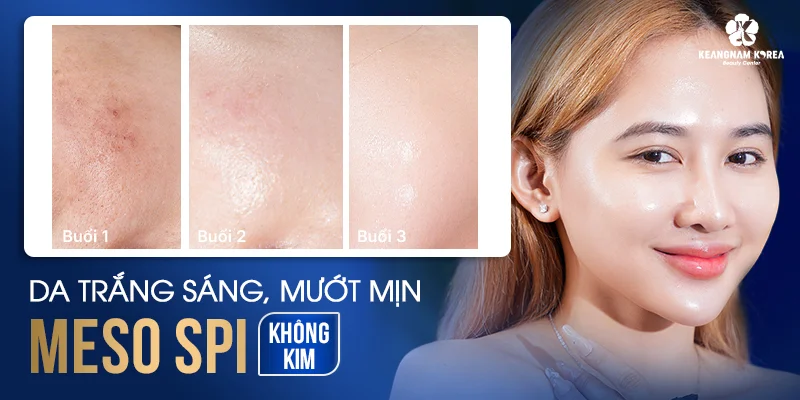
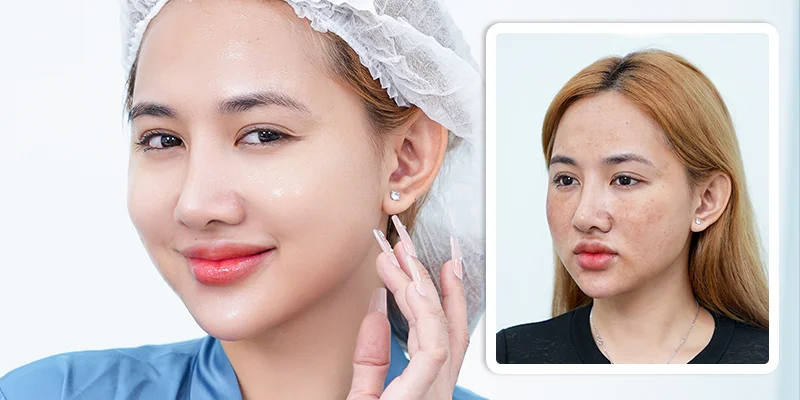
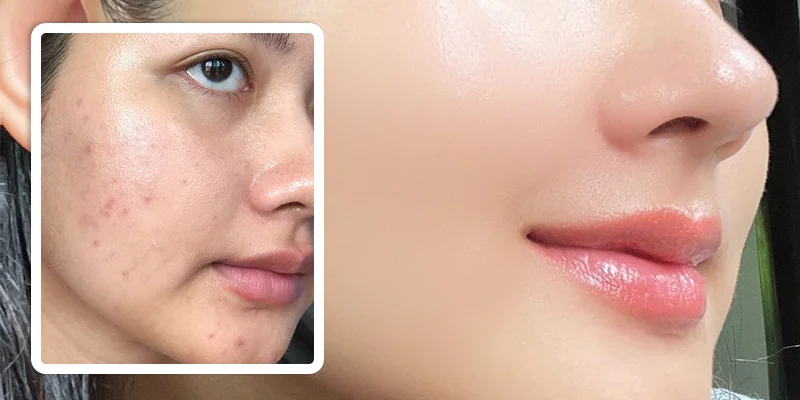
Keangnam Korea offers Meso SPI, a needle-free treatment that, according to the clinic, combines pressure technology with multi-frequency ultrasound through its HI-TECH SPI system and Reskin Sonic Pro device, using single-use tips to deliver a proprietary Exosome cocktail.
Every treatment starts with a doctor’s skin assessment. To see the full step-by-step session, read our guide to needle-free mesotherapy treatment, and for what affects the price of a course, see mesotherapy cost.
Exosome-based treatments are still a developing field. Research is promising, but no Exosome product has yet been approved by the US FDA.
Common Mistakes to Avoid
- Assuming all devices are the same. Electroporation, iontophoresis, ultrasound, and pressure systems work differently.
- Expecting injection-level depth. Device-based delivery is gentler but works more gradually.
- Stopping after one or two sessions. Results build over a course.
- Not mentioning implanted devices such as pacemakers before electrical treatments.
- Ignoring sunscreen. Daily SPF 30+ protects every result.
Frequently Asked Questions
How does no-needle mesotherapy work?
It uses electrical pulses, mild currents, ultrasound, or pressure to temporarily make the outer skin layer more permeable, so active ingredients can pass into the skin without injections.
Is no-needle mesotherapy as effective as injections?
It delivers less product per session than injections, so it’s generally gentler and more gradual. It works well for overall skin quality and maintenance, while injections are better for targeted concerns.
Does no-needle mesotherapy hurt?
Most people find it painless. You may feel tingling, warmth, or pressure depending on the technology used.
How many sessions will I need?
It depends on the device and your goals. Many clinics recommend 3–5 sessions a few weeks apart, while some electrical-device protocols use 8–10 sessions followed by maintenance.
Is it the same as virtual mesotherapy?
Yes. “Virtual mesotherapy,” “needle-free mesotherapy,” and “no-needle mesotherapy” are different names for treatments that deliver actives without injections.
Choose the Right Technology for Your Skin
No-needle mesotherapy is a smart option if you want healthier, brighter skin without injections or downtime, as long as you choose a reputable clinic and set realistic expectations.
Want to know whether no-needle mesotherapy suits your skin? Call our hotline at +84 911 833 555 for a free consultation with Keangnam Korea’s doctors.
FREE CONSULTATION