Sudden droopy eyelid is the condition where the upper eyelid droops downward, and depending on how severe it is, it may partially cover the pupil and obstruct vision. This issue can occur in anyone at any age. Some people may suddenly develop droopy eyelids even if they had no prior symptoms. To properly address and prevent this condition, below are nine common causes explained by Keangnam Korea.
Nội dung
- 1. Aging – the Most Common Cause of Sudden Droopy Eyelid
- 2. Degeneration of the Levator Muscle
- 3. Sudden Droopy Eyelid Due to Eye Infection
- 4. Eye Trauma Leading to Droopy Eyelid
- 5. Droopy Eyelid as a Symptom of Myasthenia Gravis
- 6. Mechanical Factors Causing Eyelid Drooping
- 7. Droopy Eyelid as a Complication of Diabetes
- 8. Sudden Droopy Eyelid from Severe Headache
- 9. Sudden Droopy Eyelid Due to Cold Exposure
1. Aging – the Most Common Cause of Sudden Droopy Eyelid
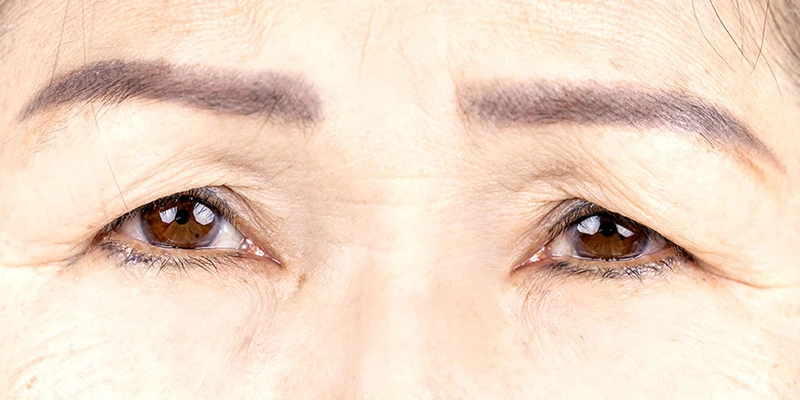
Most older adults are more likely to experience a sudden droopy eyelid. As people age, the levator muscle that lifts the eyelid gradually weakens, causing the eyelid to sag more easily. In addition, from around age 25 onward, the skin produces less collagen and becomes lax, making the eyelid skin droopy and leading to progressive eyelid drooping.
2. Degeneration of the Levator Muscle
Aside from aging, degeneration of the levator muscle can also be caused by trauma, inflammation, or post-operative changes. This structural weakening — sometimes referred to as aponeurotic weakening — results in the muscle losing tension and detaching from the eyelid’s connective tissue, leading to eyelid drooping. Over time, the muscle becomes thinner and loses nearly all movement range, affecting both appearance and vision.
3. Sudden Droopy Eyelid Due to Eye Infection
The eye is an extremely sensitive area, and if any infection occurs — such as conjunctivitis or a stye — the eyelid may become inflamed, painful, swollen, and may droop. In mild cases, symptoms may disappear within about a week with basic care and topical remedies. However, if the condition worsens, produces discharge, or is accompanied by fever, you should visit a doctor promptly for proper care.
4. Eye Trauma Leading to Droopy Eyelid
A sudden droopy eyelid may sometimes result from accidental injury to the levator muscle over time — for example, from long-term contact lens wear, excessive rubbing, or foreign objects striking the eye. These subtle factors can contribute to weakening of the muscle and eventual eyelid drooping. Reducing these behaviors can help prevent further deterioration.

5. Droopy Eyelid as a Symptom of Myasthenia Gravis
Occasionally, a sudden droopy eyelid may be a warning sign of an underlying health condition such as myasthenia gravis. This neuromuscular disorder can present with initial symptoms such as eye fatigue and unilateral drooping, often worsening by evening and possibly affecting other facial muscles. Therefore, it is important to seek immediate medical evaluation if such symptoms appear.
6. Mechanical Factors Causing Eyelid Drooping
In some cases, eyelid drooping occurs because something physically weighs down the eyelid. This is known as a mechanical cause. Examples include:
- A tumor pressing on the eyelid or eye socket
- Excess eyelid skin, adhesions from allergies, scarring from burns, or fibrotic tissue around eye muscles
These factors can make the eyelid heavier and more prone to drooping.
7. Droopy Eyelid as a Complication of Diabetes
Individuals with diabetes are more prone to developing sudden droopy eyelid due to high blood sugar levels damaging the nerves around the eye — most commonly the third cranial nerve. If diabetes is well-controlled, the condition may improve on its own. However, if the droop persists for more than six months, doctors often recommend treatment such as droopy eyelid surgery to prevent further vision complications.
Complications related to diabetes that may lead to eyelid drooping include:
- Partial or complete paralysis of the third cranial nerve
- Brainstem syndromes such as Weber syndrome
- Benedikt syndrome with same-side paralysis and tremors
- Double vision (diplopia)
8. Sudden Droopy Eyelid from Severe Headache
Severe headaches or migraines may be symptomatic of Horner’s syndrome — a neurological condition affecting the nerves in the face and eyelids. In such cases, the eyelid may droop and the pupil may constrict. If headache symptoms subside, the droop may also improve, but prompt medical evaluation is still important since both the head and eyes are highly sensitive areas.

9. Sudden Droopy Eyelid Due to Cold Exposure
When the body suddenly experiences a drop in temperature or is exposed to cold winds, it can sometimes trigger a sudden droopy eyelid, sometimes accompanied by facial asymmetry. This phenomenon — often referred to in traditional terms as “wind chill effect” — is more common in colder climates or seasons. Wearing adequate protective clothing can help prevent this.
The above are nine common causes that may contribute to a sudden droopy eyelid. Depending on the cause and severity, this symptom may resolve on its own or require professional medical attention. In mild cases, simple home treatments such as gentle massage, lifestyle adjustments, and topical care may help.
For more severe or persistent cases, a medical consultation is recommended as droopy eyelid treatment or surgery may be necessary. Various techniques such as corrective eyelid surgery or brow lifting may be recommended, depending on the individual’s condition and surgical plan determined by your doctor.

→ Learn more at: How to treat single-eyelid ptosis for different types of patients